
How To Read Year-End Lists
Plus: An Extended Recommendation Corner With Sharp Pins and Quannnic

Over at Uproxx, I did my annual guessing game ahead of year-end albums lists season, doing my best-possible prognosticating about potential critical consensus at a time when the music criticism game is more fractured than at any point I can remember. I wrote about eight albums I think will end up at or near the top of most lists. Though ultimately these three separate from the pack:
1. Rosalía — Lux
Pro: For much of my career as a music critic, the stock reference people would make when they wanted to rag on “music critic music” was to the era’s most recognizable “arty and intellectual” indie (or indie-adjacent) act. In the 2000s, it was inevitably Radiohead. In the 2010s, it was Bon Iver, The National, or anyone else who spent time in a recording studio with at least one Dessner brother. But by the 2020s, this joke was terribly out-of-date and inaccurate. This decade, the stand-in for “music critic music” might as well be Rosalía. Her 2022 album Motomami has a staggering Metacritic score of 94, an extremely high integer typically reserved for box sets that compile previously unreleased outtakes by respected legacy artists like Jesus Christ, Mohammed, and Buddha. Her 2025 effort, somehow, has an even better score, logging in at 97. It helps that Lux is a big artistic swing, with nods to classical music and opera.
Con: Forget the Metacritic score — do people really like this more than Motomami? I have no idea, though I don’t think it will matter much in the end. This is the closest thing to a lock this year.
2. Bad Bunny — Debí Tirar Más Fotos
Pro: Despite what you might have read in a “state of music criticism” thinkpiece, music critics in 2025 are not automatically rubber-stamping every big-ticket pop record as a masterpiece. (The bitchier notices written about this year’s Taylor Swift album/data dump bear that out.) It is true, however, that at least one big-ticket pop record always seems to do really well on year-end lists. And that record this year will likely be by Bad Bunny, perennially one of the most-streamed artists in the world. Plus, he’s playing the Super Bowl this year, which might inspire some scribes to give his record an extra nudge.
Con: Debí Tirar Más Fotos came out a long time ago, way back on January 5, which might as well be 1983 as far as insect-brained music critics are concerned. Probably won’t hurt him a ton, but it certainly doesn’t help.
3. Geese — Getting Killed
Pro: The indie album of the year! According to me! And probably all the other writers who still care about guitar music. Getting Killed occupies the same spot that MJ Lenderman’s Manning Works had last year, as the “guitar music indie album” with the highest enthusiasm quotient among supporters in the media. If you like Getting Killed, you love Getting Killed. You love Getting Killed so much that it makes agnostics hate Getting Killed. So be it. My advice to Geese, as borrowed from a great philosopher: Let your haters be your waiters at the table of success.
Con: Remember what I just said about “arty and intellectual” indie music? Also, there’s a decent chance the Geese vote will be split by writers who instead go with Cameron Winter’s solo album Heavy Metal, as a make-up call for missing it after its December 2024 release. They are free to do what they want, but for the record, I’ll just say: This is blatant disregard for the calendar and, in terms of the space-time continuum, totally unacceptable.
I continued the conversation on Indiecast with Ian Cohen, and ended up ruminating on my own history with year-end lists. I don’t remember when I first started making them. The earliest one that’s online is from 2000 (!), when I was going by “Steven J. Hyden.” (Every young writer should dabble with a “middle initial” phase.) I affixed this note: “I hate top 10 lists. Most of the music I buy is older because I can’t ever keep up. As soon as this is posted, I know I’ll find 10 albums I love way more than these. Cds just cost too damn much for me to buy everything I want.”
Can’t say my lifestyle has changed all that much! Though I have since come around on year-end lists. I no longer “hate” them. I don’t think I actually hated them back then, either. It’s not like I was forced at gunpoint to make one. They are a curious beast, though. When it becomes your job to have opinions about music, the process of writing down albums you liked in a 12-month period in preferential order becomes weirdly complicated. It suddenly feels like a statement. Self-consciousness starts to rear its ugly head. A list isn’t just a list.
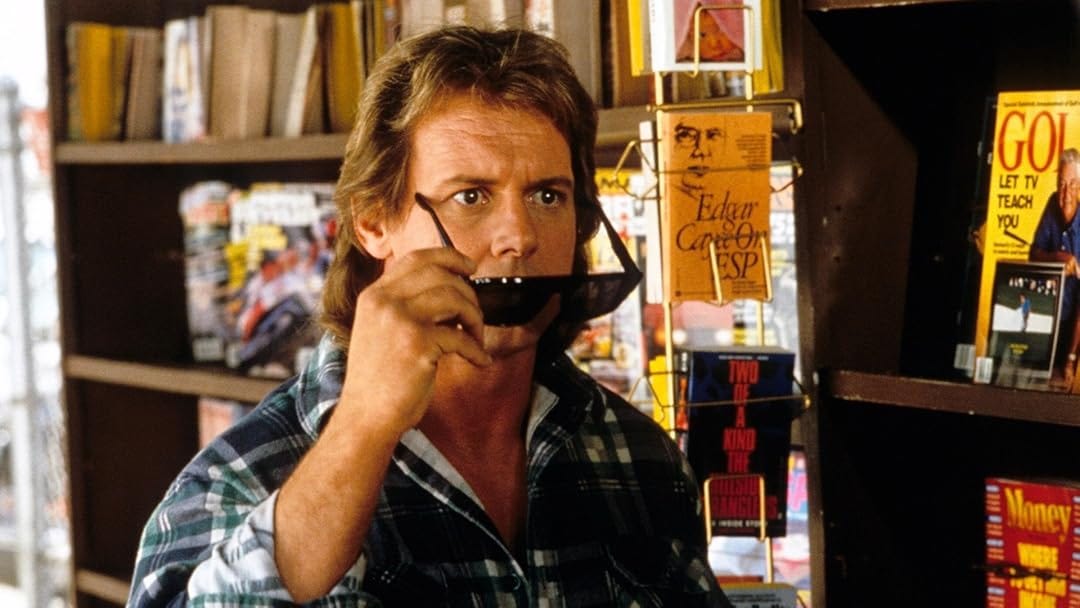
Most critics will never admit this, and I might be killed for revealing state secrets, but it’s nevertheless true that gamesmanship comes into play. This is undeniably true for institutional lists, which have dwindled in quantity and influence but still remain meaningful for the big outlets. But individual critics, I think, also regard their year-end lists as aspirational mission statements, a kind of “this is who I am, or who I want to be” manifesto. This becomes clearer when you put on the They Live glasses as you read them.
The formula goes like this:
No. 1 is the “I think this album is important right now” album, which is never the same as the “I actually enjoyed listening to this one the most” record. (That one goes at No. 4.)
At No. 2 is the “I think this might actually be the most important album but I chickened out” pick.
Similarly, at No. 3, is the “I’m reaching with this one, but I’m betting that it will look prescient in five to 10 years” choice.
In slots No. 5 and No. 7, you include (in some order) one album from a genre you don’t usually write about (to demonstrate your eclecticism) and one album that many other critics probably like (to show you are “participating in the conversation”). And then you smuggle the disreputable choice that other writers might mock you for including — what we used to call a “guilty pleasure” — at No. 6.
Then, in slots eight through 10, you include whatever “experimental” or “crossover jazz” record did well on Metacritic that year (to show you don’t just cape for “the mainstream”), one critically acclaimed pop blockbuster (to indicate to you don’t just blindly dismiss “the mainstream”), and one album absolutely nobody outside of The Quietus has heard of or cares about (because you are a special and unique individual who would never adhere to a year-end list formula).
I like to kid music critics because it’s fun and we deserve it. (I’m being more than a little facetious here! Please don’t screenshot this and tsk-tsk me to death for “projecting” or “being reductive,” denizens of Bluesky!) But as I’ve grown older, I like to think my lists have evolved toward a purer, “this is just what I like” direction. What I’ve realized is that (at best) people will quickly scan these lists, glean a few recommendations, and then instantly forget everything else. And I mean instantly. Every year-end list, even the big ones, has an extremely short shelf life. And that’s a good thing! Or, at least, it makes the act of creating a list a lot more fun and less pressure-packed. When I was a young critic, I was way too occupied with Getting It Right, when the reality is that music history is constantly being rewritten and the takes that get put down in the moment are also the first ones that get discredited and plastered over. If you’re lucky, there might be an extremely brief window of time when other people might care what your 13th favorite album of a particular year is. But for the most part, the only person who cares before and after that is you.
And (again!) that’s perfectly fine. I’ve come to think of old year-end lists like former co-workers I never see anymore. And then you randomly bump into them online or at the airport, and you’re reminded of the person you used to be. It’s kind of nice and a little strange, and then you get back to your current life, which you tell yourself isn’t as impermanent-seeming as your old ones.
RECOMMENDATION CORNER (DELUXE)
Two albums this week in Recommendation Corner, both of which are made by young wunderkinds born in the early 21st century skillfully plundering the rock music of the 20th century. The first is Sharp Pins, a side project for 20-year-old Chicagoan Kai Slater of the post-punk group Lifeguard. I like his main project, but Sharp Pins is definitely more up my alley. His new album Balloons Balloons Balloons sounds like a ’60s oldies station playing on a car radio that’s about to exit broadcast radius, all jangly guitars and wild garage-rock drum fills that are fuzzy-verging-disintegrating. (I could also be more succinct and say “RIYL Elephant Six and ’90s GBV.”) This is a style of music I never tire of! Though it’s harder to pull off than it seems. Slater already is really good at it. If he made this his main project I would not complain!
Nick Quan of the Florida outfit Quannnic is also 20 year old and also seems like an advanced student of old-world rock anthems. Only his references are grunge, shoegaze, and emo, which he filters through an extremely online and digital music-first sensibility. On their recent album Warbrained, what sounds like guitars aren’t necessarily guitars, though the overall impact certainly hits the pleasure centers of anyone who enjoys the intersections of those aforementioned ’90s guitar-music genres (Swervedriver’s 99th Dream, Ride’s Going Blank Again, every Sunny Day Real Estate album, etc.).
I make and post my best-of list on my blog, catchgroove@gmail.com, and it is purely based on my favorite new albums from the year. When I look back at old lists, I find that most of the albums are still ones I listen to, but they are impressively unhip lists that my adult music-head kids would be embarrassed by. Dad rock defined.
Really enjoyed the Sharp Pins recommendation. Also a little 2nd Grade in there if that helps others check it out.